Thursday, September 05, 2013


Welcome


September at the Mount is one of my favourite months, as we greet new students, welcome returning students and begin a new academic year with our faculty and staff colleagues.

This year the Mount celebrates its 140th anniversary, marking a distinguished history of fostering academic excellence, community building and social justice.  Our new Strategic Plan, Mount 2017: Making a Difference, will guide us in shaping an equally distinguished future for our University, and I invite you to play a role in this important work.

The construction of the Margaret Norrie McCain Centre of Teaching, Learning and Research, as you’ll have noticed, is making big changes on our campus.  While some of these changes – new routes to travel across campus or different parking spots to be found – may try our patience from time to time, we’ll see the rewards when the building is complete.  The first academic building constructed at the Mount in over 40 years, the McCain Centre will not only provide long-awaited space for key programs and departments, but, in keeping with our mission, it will also honour and tell the stories of women throughout.

I had the opportunity to tour the construction site this summer and was delighted with the progress I saw; we’re on target toward our goal of opening in December of next year.  I invite you to keep updated on the building by visiting the construction website.

This past weekend I attended orientation events for new students and was struck once again by the diversity of those who come to study at the Mount – some joining us from high school, others coming to our community as mature adults, and many arriving from around the world.  I’m excited about the year ahead as we welcome these students and strive to meet and exceed their expectations. 

At our annual Celebration of Teaching and Learning held last week, we focused on the topic of diversity.  In addition to excellent sessions led by members of our faculty, we heard a panel of students speak about their academic experience.  They were honest in telling us not only what has worked for them in their Mount education, but where we can make changes that will improve their learning.  A number of faculty and staff in attendance spoke to me of their desire to keep hearing these student voices, and we’ll seek opportunities to continue the conversation throughout the year.

My colleague Elizabeth Church, VP Academic, delivered closing remarks at the workshop, drawing a parallel between foreign travel and university.  She challenged us, faculty and staff, to be guides to our students, who are travellers in strange and unfamiliar territory—to help them remain open to others and able to learn from their experiences.  We can all benefit by thinking of ourselves as travellers in our own university, with much to learn and gain from our time together.

Enjoy your fall term and I look forward to travelling the road with you.

Ramona 

Monday, June 17, 2013

Dr. E. Margaret Fulton's Lasting Legacy


Another Convocation season has come and gone – a bittersweet time of year for us at the Mount.

Everything we do is for our students and while we proudly celebrate as they cross the stage, we must also say goodbye as they set out to make their own mark on the world.  I invite our 620 new Mount graduates to join me in celebrating the mentors, teachers, and peers who have helped prepare them for what’s to come.

Last month, we had the privilege of sharing our Spring Convocation with a number of outstanding women. Poet Lorna Crozier, sociologist Arlie Hochschild, and soprano Suzie LeBlanc (pictured left) received honorary doctorate degrees and offered graduates compelling insights on compassion, ambition, risk-taking and strength. Dr. LeBlanc, reflecting on the Mount’s founding by the Sisters of Charity, noted that “finding your strength, finding ways to make something happen that you really believe in, is the way this university was begun.”

I hope our graduates take these words to heart as they consider not only how the Mount came to be, but how it has remained true to the Sisters’ original intent over the past 140 years. For an example of how our history has been shaped by strength, creativity, and belief, we need look no further than former Mount President E. Margaret Fulton.

While she wasn’t able to join us in person, I am delighted that Dr. Fulton was recognized at our Spring Convocation in her new role as President Emerita, in tribute to her outstanding contributions as the leader of this institution from 1978 to 1986, and as a trusted friend ever since.

Dr. Fulton broke new ground from day one at the Mount, serving as our first President who was not a Sister of a religious order, as well as the only woman President of a Canadian university at that time. In a 1999 interview she recalled how shared priorities with the institution turned an unconventional pairing into the perfect fit:

“The goals and the statement fitted perfectly where I was at that time: my commitment to the changes in the women’s movement, and the development of a feminist perspective, and a desire to provide more opportunities for women to get an advanced education.”

It was her passion for women’s education that drove Dr. Fulton to usher in an era of great innovation at our university. While she’s quick to credit her success to others, it was under her leadership that the Mount made education more accessible by becoming the first university in Atlantic Canada to offer televised courses. Further, it was through her work with our dear Ruth Goldbloom that the Mount’s first major capital campaign raised $3.5 million to fund the Rosaria Student Centre, the creation of the first Chair of Women’s Studies in Canada, and the first Co-operative Education program in the Maritimes.

And just this year, it was a gift from Dr. Fulton that pushed Project TWENTY12 past the $12 million mark, proving that even at age 90, she hasn’t quite finished shaping the future of the Mount for generations of students yet to come.

In my conversations with Dr. Fulton, what always strikes me is the wonderful curiosity and excitement she continues to feel about everything to do with the Mount. She believes in us, she still expects a lot from us, and it is our ongoing privilege to continue building upon her remarkable legacy.

Congratulations, Margaret, and thank you.

Monday, April 29, 2013


Small and Successful

In conversations about the Mount, people often mention our size. That’s quite natural when you consider, in a world of mega-universities, our overall enrolment of 4,000 students and our average class size of 24.

Size alone isn’t what’s important, however, but rather the advantages we can derive from being small. Our typical class size means our professors really do know their students on a first-name basis. It’s our size that allows us to form close personal and professional connections with one another, creating a highly engaged learning community—a key component in the success of our students, staff, and faculty.

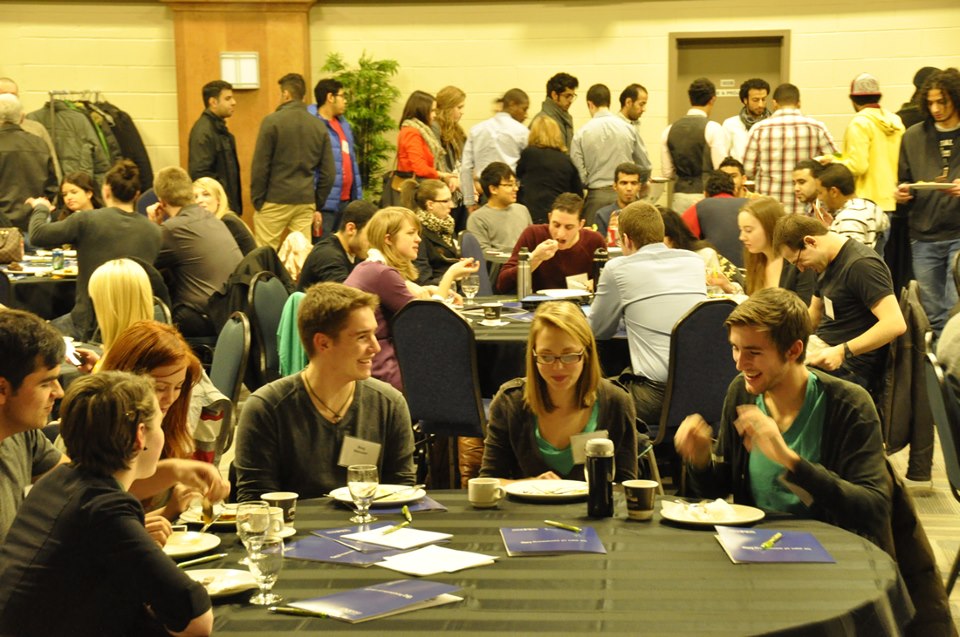
Take Dr. Peter Mombourquette, for example, who is one of many Mount faculty members who extend the student experience beyond the classroom.  Peter is the Chair of our Department of Business and Tourism, and he’s a passionate champion for social entrepreneurship. Over the past two years, he has enriched the learning experience of students with extracurricular opportunities by showcasing how to solve complex problems with a balance of empathy and innovation. Starting small with food drives and blanket collections, his initiative quickly evolved into an annual two-day conference, Social Entrepreneurship for a Day (SE4D), where students collaborate with mentors to find creative solutions that address critical social needs.

SE4D developed organically, but it was far from accidental. The Mount’s environment of close-knit relationships, rich learning experiences, strong mentorship, and commitment to service saw one person’s passion become a signature feature of our student experience.  And the 150 participants in this year’s SE4D are proof that our students eagerly seek out these opportunities to contribute to the broader community.

My colleague Dr. Robert Campbell, President of Mount Allison University and current Chair of the Association of Atlantic Universities, recently noted the importance of universities to our region. He wrote in The Globe and Mail that universities in Atlantic Canada are key economic drivers, stimulating growth and creating thousands of jobs.  The primary role of universities, of course, is to stay true to our core mission—the education of our students. But education goes hand in hand with social and economic prosperity; the two are not mutually exclusive. We need to ensure that our students graduate with the knowledge and skills they need to succeed fully as human beings, and in turn their individual contributions after graduation will showcase the value of our time together. Our small size is a great asset in this undertaking.

At the Mount, our commitment to students is interwoven with the value we place on strong communities. We make sure that each of our students feels valued and engaged, and that each has the opportunity to experience a sense of belonging. In return, our students graduate ready to shape the world around them. Far from just a reflection of our size, I consider this outcome to be the hallmark of a Mount education.