Monday, September 23, 2013

Nova Scotia's Education Advantage


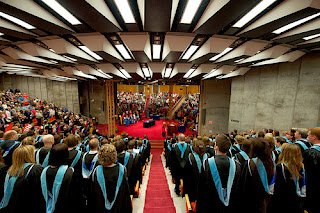
Recently I sat at dinner beside a gentleman who told me he had attended the Mount’s Convocation for the first time this May. When I asked him why, he told me that he and his wife have a housekeeper who for many years has been working part-time in the evenings to complete her degree. She’s the first in her family to attend university, and they were there to celebrate her success. This story offered a powerful reminder of the dedication and hard work that goes into earning a university degree, and the pride our graduates – and their supporters – take in their accomplishments.

Nova Scotia is home to ten excellent universities, each boasting thousands of similar success stories every year. As the Mount graduates talented students in fields such as communications, modern languages, applied nutrition, family studies, public policy, economics and more, so too do our counterparts in their areas of focus. These efforts arm our province with a highly educated, highly skilled, competitive workforce and each graduate is a testament to the role we play in elevating our region as a whole. But our contributions extend far beyond annual convocations.

Our new international students visit Peggy's Cove
According to a 2013 report by the Council of Nova Scotia University Presidents, our province’s universities produce a combined economic output of $2 billion, $220 million in tax revenues, $840 million in annual export revenues, and over 8,000 jobs. Our strategic value for the province is substantial. We can attract international immigrants, we can contribute research and innovation to all sectors, and we can ready our younger students to stay and work right here – all this with the second lowest provincial funding per student in the country.

As a major port city in Eastern Canada, Halifax is at a crossroads. The Nova Scotia government, in partnership with the federal government, appreciates the value of internationalization and has made it a priority to increase immigration in the province, particularly Canadian-trained international graduates. Our universities have a key role to play in this process.

Organizations such as EduNova are working hard to grow the number of international students in Nova Scotia’s universities, colleges, and schools. In 2012-13, over 6,000 international students (13.8 % of the total student body) chose to study in Nova Scotia’s universities. These students generate over $230 million for Nova Scotia’s economy, and hundreds of jobs right across the province. Many of these students choose to stay in Nova Scotia after graduation, bringing valuable international skills and experiences, global networks, and new perspectives to our communities.

Meng Zhao, BPR '10
Currently, the Mount’s student body of just over 4,000 includes 590 international students from over 50 countries. Apart from the strong economic case for international education, these students greatly enrich our campus, many becoming leaders in both academics and community service. PR graduate and Dakai Magazine founder Meng Zhao sets a strong example as she builds ties between the local community and Chinese culture. It’s clear that the ongoing accomplishments of our international students will only continue to enhance our region.

As we welcome students from across the country and around the world for another year, let’s remember the importance of what we do and why we do it here in Nova Scotia. Our work as universities has tremendous benefits on an individual basis as seen by our students, their classmates, and their employers, and on a broader scale as seen through our contributions and innovations across all sectors. Just as our province offers a strong environment for post-secondary education, we in turn continue to strengthen Nova Scotia’s global appeal.

Thursday, September 05, 2013


Welcome


September at the Mount is one of my favourite months, as we greet new students, welcome returning students and begin a new academic year with our faculty and staff colleagues.

This year the Mount celebrates its 140th anniversary, marking a distinguished history of fostering academic excellence, community building and social justice.  Our new Strategic Plan, Mount 2017: Making a Difference, will guide us in shaping an equally distinguished future for our University, and I invite you to play a role in this important work.

The construction of the Margaret Norrie McCain Centre of Teaching, Learning and Research, as you’ll have noticed, is making big changes on our campus.  While some of these changes – new routes to travel across campus or different parking spots to be found – may try our patience from time to time, we’ll see the rewards when the building is complete.  The first academic building constructed at the Mount in over 40 years, the McCain Centre will not only provide long-awaited space for key programs and departments, but, in keeping with our mission, it will also honour and tell the stories of women throughout.

I had the opportunity to tour the construction site this summer and was delighted with the progress I saw; we’re on target toward our goal of opening in December of next year.  I invite you to keep updated on the building by visiting the construction website.

This past weekend I attended orientation events for new students and was struck once again by the diversity of those who come to study at the Mount – some joining us from high school, others coming to our community as mature adults, and many arriving from around the world.  I’m excited about the year ahead as we welcome these students and strive to meet and exceed their expectations. 

At our annual Celebration of Teaching and Learning held last week, we focused on the topic of diversity.  In addition to excellent sessions led by members of our faculty, we heard a panel of students speak about their academic experience.  They were honest in telling us not only what has worked for them in their Mount education, but where we can make changes that will improve their learning.  A number of faculty and staff in attendance spoke to me of their desire to keep hearing these student voices, and we’ll seek opportunities to continue the conversation throughout the year.

My colleague Elizabeth Church, VP Academic, delivered closing remarks at the workshop, drawing a parallel between foreign travel and university.  She challenged us, faculty and staff, to be guides to our students, who are travellers in strange and unfamiliar territory—to help them remain open to others and able to learn from their experiences.  We can all benefit by thinking of ourselves as travellers in our own university, with much to learn and gain from our time together.

Enjoy your fall term and I look forward to travelling the road with you.

Ramona 

Monday, June 17, 2013

Dr. E. Margaret Fulton's Lasting Legacy


Another Convocation season has come and gone – a bittersweet time of year for us at the Mount.

Everything we do is for our students and while we proudly celebrate as they cross the stage, we must also say goodbye as they set out to make their own mark on the world.  I invite our 620 new Mount graduates to join me in celebrating the mentors, teachers, and peers who have helped prepare them for what’s to come.

Last month, we had the privilege of sharing our Spring Convocation with a number of outstanding women. Poet Lorna Crozier, sociologist Arlie Hochschild, and soprano Suzie LeBlanc (pictured left) received honorary doctorate degrees and offered graduates compelling insights on compassion, ambition, risk-taking and strength. Dr. LeBlanc, reflecting on the Mount’s founding by the Sisters of Charity, noted that “finding your strength, finding ways to make something happen that you really believe in, is the way this university was begun.”

I hope our graduates take these words to heart as they consider not only how the Mount came to be, but how it has remained true to the Sisters’ original intent over the past 140 years. For an example of how our history has been shaped by strength, creativity, and belief, we need look no further than former Mount President E. Margaret Fulton.

While she wasn’t able to join us in person, I am delighted that Dr. Fulton was recognized at our Spring Convocation in her new role as President Emerita, in tribute to her outstanding contributions as the leader of this institution from 1978 to 1986, and as a trusted friend ever since.

Dr. Fulton broke new ground from day one at the Mount, serving as our first President who was not a Sister of a religious order, as well as the only woman President of a Canadian university at that time. In a 1999 interview she recalled how shared priorities with the institution turned an unconventional pairing into the perfect fit:

“The goals and the statement fitted perfectly where I was at that time: my commitment to the changes in the women’s movement, and the development of a feminist perspective, and a desire to provide more opportunities for women to get an advanced education.”

It was her passion for women’s education that drove Dr. Fulton to usher in an era of great innovation at our university. While she’s quick to credit her success to others, it was under her leadership that the Mount made education more accessible by becoming the first university in Atlantic Canada to offer televised courses. Further, it was through her work with our dear Ruth Goldbloom that the Mount’s first major capital campaign raised $3.5 million to fund the Rosaria Student Centre, the creation of the first Chair of Women’s Studies in Canada, and the first Co-operative Education program in the Maritimes.

And just this year, it was a gift from Dr. Fulton that pushed Project TWENTY12 past the $12 million mark, proving that even at age 90, she hasn’t quite finished shaping the future of the Mount for generations of students yet to come.

In my conversations with Dr. Fulton, what always strikes me is the wonderful curiosity and excitement she continues to feel about everything to do with the Mount. She believes in us, she still expects a lot from us, and it is our ongoing privilege to continue building upon her remarkable legacy.

Congratulations, Margaret, and thank you.

Monday, April 29, 2013


Small and Successful

In conversations about the Mount, people often mention our size. That’s quite natural when you consider, in a world of mega-universities, our overall enrolment of 4,000 students and our average class size of 24.

Size alone isn’t what’s important, however, but rather the advantages we can derive from being small. Our typical class size means our professors really do know their students on a first-name basis. It’s our size that allows us to form close personal and professional connections with one another, creating a highly engaged learning community—a key component in the success of our students, staff, and faculty.

Take Dr. Peter Mombourquette, for example, who is one of many Mount faculty members who extend the student experience beyond the classroom.  Peter is the Chair of our Department of Business and Tourism, and he’s a passionate champion for social entrepreneurship. Over the past two years, he has enriched the learning experience of students with extracurricular opportunities by showcasing how to solve complex problems with a balance of empathy and innovation. Starting small with food drives and blanket collections, his initiative quickly evolved into an annual two-day conference, Social Entrepreneurship for a Day (SE4D), where students collaborate with mentors to find creative solutions that address critical social needs.

SE4D developed organically, but it was far from accidental. The Mount’s environment of close-knit relationships, rich learning experiences, strong mentorship, and commitment to service saw one person’s passion become a signature feature of our student experience.  And the 150 participants in this year’s SE4D are proof that our students eagerly seek out these opportunities to contribute to the broader community.

My colleague Dr. Robert Campbell, President of Mount Allison University and current Chair of the Association of Atlantic Universities, recently noted the importance of universities to our region. He wrote in The Globe and Mail that universities in Atlantic Canada are key economic drivers, stimulating growth and creating thousands of jobs.  The primary role of universities, of course, is to stay true to our core mission—the education of our students. But education goes hand in hand with social and economic prosperity; the two are not mutually exclusive. We need to ensure that our students graduate with the knowledge and skills they need to succeed fully as human beings, and in turn their individual contributions after graduation will showcase the value of our time together. Our small size is a great asset in this undertaking.

At the Mount, our commitment to students is interwoven with the value we place on strong communities. We make sure that each of our students feels valued and engaged, and that each has the opportunity to experience a sense of belonging. In return, our students graduate ready to shape the world around them. Far from just a reflection of our size, I consider this outcome to be the hallmark of a Mount education.

Wednesday, March 27, 2013

Creating Momentum in Aboriginal Education


Consider this: more than one-third of Aboriginal people of high school age or older have not completed high school, and only eight per cent of Canadian Aboriginal people between the ages of 25 and 64 have a university degree.

It’s easy to see why Aboriginal education should be a policy priority for all levels of government in Canada. Education, particularly at the college or university level, is critical to helping all of us achieve our goals, support our families, and compete in a quickly changing job market. Historically, few First Nations students have had the tools or support to succeed in post-secondary education. Fortunately, in the past few years, there are indications that this tide is shifting.

Recognizing the challenge and the importance of providing support and access to education for Aboriginal Canadians, the Association of Universities and Colleges of Canada (AUCC) has made Aboriginal education one of its priority policy items and has been lobbying the federal government to increase funding for Aboriginal students. The AUCC has also launched a number of dynamic online tools to create awareness and understanding of the success many young First Nations students have achieved at the university level. Among these tools is a summary of opportunities in education across Canada for Aboriginal students. AUCC has also produced a compilation of resources for Aboriginal students, including a list of bursaries, indigenous services, transition programs, and elder visits across the country.

Jenna Marr, a first-year Mi’kmaq student from Indian Brook, is featured prominently as a success story in the AUCC database. Jenna, one of the Mount’s student ambassadors, is currently studying in our Public Relations program, and has helped our recruitment team reach out to prospective students through campus tours, special on-campus events, and school visits. We’re proud of Jenna’s contributions and her work as a role model for other Mi’kmaq youth.

At the Mount, we’ve introduced a number of initiatives to better support and encourage Mi’kmaq and other Aboriginal students. Our Aboriginal Advisory Committee has been instrumental in giving insights to the university’s leadership team on how we can do a better job of building a community where Aboriginal students are able to achieve their goals. We also recently welcomed Art Stevens as the Mount’s new Coordinator of Aboriginal Services to develop programming and resources to support our First Nations students.

Most recently, on February 28, I was delighted to join staff, students, and special guests from the community for the opening of the Mount’s Aboriginal Student Centre. The Centre was established as a community hub where students can meet, chat, and have access to a resident counselor. Dr. Don Julien, Executive Director of the Confederacy of Mainland Mi’kmaq and member of our Aboriginal Advisory Committee, led us in prayer as part of the day’s ceremonies. We’re grateful for his leadership and for the support, wisdom and guidance of all members of our Advisory Committee.

Securing access to education affects all of us, whether at the campus, community, or national level. It’s vital—to our communities, our country, but most importantly, to young Aboriginal students from across the country—to ensure we are providing the tools for Aboriginal students to realize their dreams.

Until next time,

Ramona

Wednesday, March 06, 2013

Celebrating Girls and Women


As we approach International Women’s Day (IWD) on March 8, it’s important to reflect on the issues facing women and girls in our communities and around the world. In 2013, there are still some who might question the importance of paying tribute to women through a global event such as IWD.

In a remarkably short period of time, six Canadian provinces and territories, representing over 85 per cent of the Canadian population, are now governed by women premiers. Globally, there are more female heads of state than at any time in history. In university classrooms across Canada, young women now make up the majority of undergraduate students and have pulled ahead in gaining admission to professional programs such as medicine and law.

But such advances mask a larger climate of gender inequality. Women still remain woefully underrepresented in corporate boardrooms and in parliaments across Canada and the globe. Violence against girls and women in the home, in the workplace, and in communities, remains unacceptably high.

The lives of many murdered and missing Aboriginal women from across Canada in the last few decades have been largely ignored by mainstream media. Young girls and women are still entering academic programs in the science, technology, engineering, and mathematics (STEM) fields at levels far below their numbers in others. In the media, in schools, and in the broader culture, young women and girls remain inundated with contradictory messages about their value and about what it means to be a woman in 2013.

Globally, the situation remains concerning. While Saudi Arabia only recently welcomed women to its governing Shura Council, women in that country are still banned from driving and are forbidden from holding high political office. Recently, a vicious assault on a Delhi city bus drew condemnation from around the world and shone a light on the often brutal realities for women in contemporary India. These are just two alarming examples of the perceived value of girls and women in some societies.

Addressing the difficulties faced by women and girls is a collective responsibility. At the Mount, we are grateful for the historical example of the Sisters of Charity and of our many faculty, staff, students and alumnae who continue to work for the betterment of girls and young women in our communities and around the world. We are also eager to see what’s in store at this year’s Girls’ Conference, an annual event which seeks to create a sense of community while addressing tangible solutions to challenges facing girls and women.

We are inspired by faculty like Dr. Tamara Franz-Odendaal, NSERC Atlantic Chair for Women in Science and Engineering, who connects girls across the Atlantic provinces with mentors and positive role models in the science and engineering fields. We give thanks for the many pioneers who have paved the way for new generations – women like the late Dr. Daurene Lewis, a trailblazer in the African Nova Scotian community, whose work at the Mount’s Centre for Women in Business equipped many female entrepreneurs with the skills and networks they needed to thrive.

Finally, we look forward to the future, and to breaking ground on the new Margaret Norrie McCain Centre for Teaching, Learning, and Research. The McCain Centre is the first university academic building in Canada dedicated entirely to honouring women. It will house many of the Mount’s signature programs, including our recently renamed Alexa McDonough Institute for Women, Gender and Social Justice. It will also feature the Riva Spatz Women’s Wall of Honour, a unique tribute to women from all walks of life – our mothers and daughters, our sisters and friends.

This March 8, International Women’s Day, please join me in celebrating and honouring the diverse experiences of women and girls.

Until next time,

Ramona

Thursday, January 31, 2013

The Spirit of Giving Back: Caritas Day


A photo taken during the fire of '51
At the Mount, we’re justifiably proud of our commitment to making a difference in our communities. We were founded by the Sisters of Charity in 1873 to educate and provide opportunities to girls and young women, opportunities that were few and far between at the time.

Caritas Day springs from the same spirit of service. After a devastating fire in 1951, the Sisters of Charity, overwhelmed by the generosity that helped get the university back on its feet, instituted a day each year that would allow students to “give back” to the wider community.

Bachelor of Public Relations student,
Allison Sparling
Mount students, staff, and faculty are active in communities locally, nationally, and around the world. One of our current students, Allison Sparling, has helped organize opportunities for women to become more involved in political life through her collaborative Walk with Her campaign.

Meng Zhao, who came to the Mount from China and has since gone on to become an active member of the Halifax community, is about to launch the first Chinese-language magazine in the Maritimes.

And Joan Ntebohelen (Kolane), a Mount alumna now living in Pretoria, South Africa, was inspired by the values of hard work and service she learned at the Mount and is now the United Nations Chief of Nutrition and Food Security in Ethiopia.

Our communities far and wide continue to need our help. A report from Feed Nova Scotia states that in March 2012 alone, over 23,500 Nova Scotians were assisted by their local food bank. This is a nearly 40 per cent increase from only four years earlier.

Shown above: Donations
from the Caritas Day 2013
food drive.
 Across Canada, nearly 3.2 million people live in poverty. More than a third of those in our country who receive assistance from food banks are young people or children. According to the United Nations, nearly 1 in 8 people around the world goes hungry each day.

Clearly, much work needs to be done. But there are signs of hope. According to statistics provided by the Government of Nova Scotia, 453,000 Nova Scotians give back to their communities through acts of volunteering.

Perhaps most encouraging, nearly 65% of young people in our province volunteer. Organizations like Feed Nova Scotia, among countless others, continue their good work helping the most vulnerable among us.

We each of us have the chance to make a difference.  Caritas Day is an opportunity for all of us to commit ourselves to the service of others through acts of generosity, however large or small – on campus, within our home communities, and around the world.

Until next time,

Ramona

More stories:

Friday, December 14, 2012

Looking Back, Looking Forward


As we approach the end of another year, it’s a fitting time to reflect on a few highlights from 2012. It was a remarkable year for our community, as the Mount celebrated a number of key accomplishments and anniversaries.

Looking Back

In February, to great fanfare, we announced the largest donation in the history of the Mount. Margie McCain’s generous gift of $2.25 million for the new Margaret Norrie McCain Centre for Teaching, Learning and Research was welcomed by an enthusiastic and supportive Mount community. Her gift will ensure a legacy of high-quality classroom, research and learning space for future generations of Mount students and faculty.
This year also marked an important milestone as we celebrated our first graduates from the Bachelor of Science (Science Communication) program. This ground-breaking program combines the rigours of science and the study of communication practice, positioning our graduates to explain the complexities of science and technology to our communities and to the media.

Program Anniversaries

The year 2012 also marked the 35th anniversary of the Mount’s highly-regarded Bachelor of Public Relations program. All across the globe, Mount PR grads are making a difference in industry, non-profit, and the public sectors by bringing their stories to life.
Distance Learning and Continuing Education (DLCE) recognized their 30th anniversary this past year. The occasion was marked by bringing together staff, students, and faculty who have been part of the Mount’s successful outreach to distance education students over the past three decades.
It was also the 20th anniversary for two important cornerstones of the Mount community. The Nova Scotia Centre on Aging celebrated its 20th anniversary with a high-profile national conference called “Our Future Is Aging”. The Centre for Women in Business also marked 20 years dedicated to supporting local and regional women business leaders and entrepreneurs.

Looking Forward

The year 2013 promises to be no less exciting. We’re marking 140 years of history and an impressive legacy of commitment to the advancement of women, to social justice, and to supporting and nurturing accessible learning for all members of our community. We recently launched our Facebook Timeline to mark some of the key moments in our collective history. I’m hopeful that our recent work with Nova Scotia’s Mi’kmaq communities, the hiring of our first Aboriginal student advisor, and the opening of the Mount Aboriginal Friendship Centre will help ensure that we serves the needs of an under-presented Nova Scotian community on our campus.
Early in the new year, we’re also planning to celebrate the sod-turning for the McCain Centre, an accomplishment in which we can all take pride. I’d like to recognize the tremendous work of our campaign volunteers and everyone who has supported the vision for this project. At last we’ll have the chance to see the next stage of our journey as an institution unfold. As of this month, we’re very close to our fundraising goal, having raised over $11.3 million toward the $12 million needed to wrap the campaign.
I know you’ll have your own goals, accomplishments, and milestones to celebrate as we head into the new year. It’s a pleasure to work with such a dedicated group of faculty, staff, and students. I wish everyone a great holiday season, and all the best for a productive and rewarding 2013.

Until next time,

Ramona
PS. Check out the Mount’s holiday video

Thursday, November 15, 2012

Education as a catalyst for change

Reflections from Fall Convocation

Convocation offers the opportunity for reflection, a chance to think deeply about the role education plays in our lives and in our communities. In a world marked by political conflict and growing social and economic inequality, education is a powerful tool that offers us the chance to use our skills and knowledge to improve our shared world. Last month, as we celebrated this fall’s 340 graduates and their many accomplishments, I was reminded again of the power we have as individuals to be catalysts for positive change, through actions large and small.
Our convocation student award winners, including our fifteen Senate medallists, have demonstrated through their academic and personal success an aptitude for leading by example. Their hard work, perseverance, and tenacity have served them well during their time here at the Mount, and as these students and the rest of this year’s graduating class continue their journey as Mount alumnae, I look forward to many more stories of leadership, determination, and examples of the Mount spirit of engagement with the world in action.

Shown here is Dr. Joan Glode, addressing guests during
 the Chancellor's Dinner.

This fall’s convocation ceremonies also marked the opportunity to recognize the leadership and lifelong service of two very remarkable women, both of whom were awarded honorary doctorates. Dr. Joan Glode is a proud and respected member of the Mi’kmaq First Nation community of Acadia. Dr. Glode has dedicated her life’s work to advocating and working for Aboriginal families and children as executive director of Mik’maw Family and Children’s Services of Nova Scotia, as well as through her work with the Nova Scotia Human Rights Commission and the Micmac Native Friendship Centre. As she received her honorary doctorate from the Mount and addressed this fall’s graduates, she shared the powerful life stories of several Mi’kmaq teens she has worked with during her career, and spoke of the need for every individual to have a clear sense of belonging and identity. Her passion, vision and ability to bear witness to these stories serve as a powerful reminder of the difference compassionate leadership can make.

Shown above (L-R): Sarah Veinot, Board of Governors (Chair);
Dr. Margaret Casey, CM, MD, LLD, DHumL; myself, and
S. Donna Geernaert, University Chancellor.

Dr. Margaret Casey also received an honorary doctorate in last month’s ceremonies. Dr. Casey’s primary focus of work as a doctor has taken place at the North End Community Health Centre, an inner-city resource that provided her with the opportunity to gain an understanding of the impact of social determinants of health and social justice. Dr. Casey’s skills and abilities might have taken her anywhere, but she chose to dedicate her career to supporting and empowering those in need. As a lifelong advocate for social justice, Dr. Casey urged graduates not to stand on the sidelines of life, but to consider their individual responsibility to use the tools they have acquired to make positive change in the world. “Whatever you can give matters,” she said. “Each of us has a role. Opportunity for change exists in each career path.”
The path to success is indeed a very personal journey, one that is not always measured in awards or external recognition. Sometimes success is a quiet, private affair, recognized by overcoming tremendous odds and obstacles that may be difficult for others to comprehend or fully appreciate. During this year’s convocation, I was moved by many such stories of individual success.

Dr. Elizabeth Church, Vice-President (Academic); Dayle
Eshelby, Valedictorian (morning ceremony); and myself.

Dayle Eshelby, one of this fall’s valedictorians, is testament to such determination of spirit. As a teenager, Dayle was involved in a motorcycle accident that left her with catastrophic brain-stem trauma. Over the years, Dayle worked as a research technician and a variety of jobs while balancing life as a young mother and active community member in the town of Lockeport. She returned to the Mount part-time as a mature student and continued to be actively involved in community organizations. Recently, she was elected to municipal council and she has now started her own company. In addition to graduating as class valedictorian, Dayle was also awarded the President’s Prize and the Kappa Gamma Pi award.
At the Mount, we believe that each of us has a responsibility to lead by example. I’m inspired by the stories of students like Dayle and by the selfless examples of leadership-in-action demonstrated by the work of Dr. Glode and Dr. Casey. These individuals are forces for good, and their work inspires us all to continue to be part of the change we wish to see in the world.
Until next time,
Ramona

Thursday, November 08, 2012

Mikmaw and Maliseet Youth get a taste of campus life at the Mount


Mount Saint Vincent University was delighted to host, in cooperation with the APC and the AHHRI,  a two-day conference for Aboriginal youth on October 12-13. John Sylliboy, who spearheaded planning for the conference, shares an account of the event in this month’s President’s blog.

Until next time,
Ramona

______________________________________________________________________________


Students are source of knowledge sharing


Let’s not forget why we are educators…it’s tapping into those emotions that provoke pride and motivation in making connections with students through learning.

 
John R. Sylliboy, AHHRI Coordinator, Mark de Jonge, Olympic
medalist and keynote speaker, and Alan Polchies Jr, St. Mary’s
First Nation Councillor/Facilitator

The Mount hosted more than 80 youth in grades 9-12 from ten Atlantic First Nations communities. They spent two days on campus with professors, guidance counselors, career specialists and volunteers to share career opportunities offered in post-secondary education. Smiles expressed satisfaction between Mount faculty and aboriginal youth in their mutual development of trust and sharing of knowledge. The theme of the conference Mawitaql Kjijtaqnn is the “gathering of knowledge” in Mi’kmaq, which was planned to coincide with Mount’s celebration of Mi’kmaq History Month in Nova Scotia.

Aboriginal youth displayed a keen interest in sharing who they are as: youth, Mi’kmaq, Maliseet, junior/high school students, individuals with dreams and aspirations. The Mount faculty welcomed their enthusiastic nature by taking on the challenge to motivate the young learners onto a path of post-secondary learning.

The university prepared a day of active learning by sharing various options for career paths through hands on approaches with workshops in science, nutrition, education and lifelong learning. Topics were diverse and youth oriented, while the professors were eager to capture the liveliest of attention spans and interests. One professor mentioned, “Students need to see post-secondary education as a means for higher learning that is both lively and full of hope; that professors are not just a bunch of talking heads”

On the last day of the conference, health career students and graduates shared their stories and experiences in university. They are mentors in areas of youth leadership, action and motivation. They all touched on the importance of Aboriginal health care providers working in First Nations communities. One grade 12 student bravely volunteered to be part of the panel to share why she would like to pursue nursing. This was an unexpected bonus for the audience and organizers. She announced that she would go into nursing next fall. She sent a message on twitter and facebook to express her delight and satisfaction after the event.

Universities and AHHRI in Atlantic Canada


The Mount and Atlantic Policy Congress of First Nations Chiefs Secretariat (APC) partnered to host the Aboriginal Health Human Resources Initiative (AHHRI) Regional Knowledge Translation Forum on October 12-13th. They planned for months on protocols, cultural events, and curricula development for the workshops and presentations. The original plan was to host the students on campus during summer months when the residences weren’t occupied. After consultation with the First Nations education leaders, October was recommended because of the month long celebrations.


Wayne Morris, Wagmatcook School Principal is engaged
 with Mount Recruitment team.

The Forum was a platform to share AHHRI presentations on projects in partnership with Atlantic universities and colleges. First Nations representatives, faculties and post-secondary Aboriginal advisors attended presentations from Dalhousie, StFX, University of New Brunswick, University of PEI, Memorial University and College of North Atlantic. These institutions were funded through APC’s AHHRI program to develop pilot projects in their respective health programs.

Universities developed projects to include recruitment in nursing, Aboriginal health sciences, and bridging programs to support students in health programs. Best practices and successful programming were shared among peers that work in various capacities with Aboriginal post-secondary content, curriculum developers and faculty, or institutions interested in developing similar supports.

Cultural competency is one of the most important components for successful development of programs, especially in curriculum development. Universities are taking baby steps to include aboriginal perspectives, hiring of Aboriginal faculty and providing Aboriginal advisors as sustainable student supports. It is hoped that post-secondary institutions will continue sustaining programs long after the AHHRI sunsets in March 2015.

The Forum and Mount Saint Vincent University


In the opening remarks by Chief Deborah Robinson, Acadia First Nation, APC Co-Chair stated, “There is a need to improve the access, recruitment, retention and success in post-secondary education for our Aboriginal students.” Chief Robinson continued, “Aboriginal communities across Atlantic Canada need to be poised to take advantage of and support economic opportunities and the well-being of community members and post-secondary education has a key role in this effort.”


Perfect fall day for a Career Fair hosted by the Mount
with Atlantic First Nations youth.

The Mount has been en route in strengthening supports for the current 60 plus self-identified Aboriginal students within the institution. In the last two years, the Mount has taken considerable steps to outreach with the Mi’kmaw community. President Ramona Lumpkin invited Mi’kmaw educators and leaders to form an Advisory Committee for consultation following the advice of Elders. Mount’s efforts to build relations with the aboriginal community is part of the President’s vision to continue supporting capacity development within the institution and ensure quality education to all the diverse cultures represented in the student population.

AHHRI continues to build on the success of AHHRI programs and to strengthen the First Nations health care work force. Sharing knowledge and creating platforms for student awareness and participation will assist Aboriginal students, education directors and counselors. In fact, projects in the health programs provide a wealth of knowledge and experience – moldable for other faculties’ sciences and technological fields.

160 people walked away from the Forum feeling pretty optimistic that post-secondary education is laying solid foundations to meet Aboriginal educational needs for health programs in Atlantic Canada.  This is the first Atlantic conference on Aboriginal post-secondary education of this magnitude. It brought students, educators and administrators together under one roof. APC continues to celebrate successes in developing strategies to increase the numbers of Aboriginals in health careers. This partnership with the Mount is one of the successes.

Mount Saint Vincent University provided in kind supports for logistics, faculty resources, staff and volunteers to make the Forum a huge success. This commitment and partnership building with APC is in itself a best practice. It shows how post-secondary institutions can develop initiatives using their own resources, while being inclusive in the process. The Mount respected recommendations made by Elders and Mi’kmaw educators. Its efforts are genuine in its approach to First Nation consultation, inclusive decision making and active partnership building, which will only provide positive outcomes to improve education for its Aboriginal population.

The Atlantic Policy Congress of First Nations Chiefs Secretariat has partnered with First Nations Inuit Health Branch – Health Canada and the Nunatsiavut Government to develop and promote AHHRI objectives through partnership building and funding with universities/colleges, First Nations and Inuit communities and Aboriginal organizations.

Atlantic Policy Congress of First Nations Chiefs Secretariat is an advocate for speaking with one voice on behalf of First Nations communities. Through research and analysis, APCFNC develop and table policy alternatives for matters affecting First Nations communities in Atlantic Canada, Quebec and Maine, USA. Its mandate is to “research, analyze and develop alternatives to federal policies that affect Mi’kmaq, Maliseet, Innu and Passamaquoddy First Nations in the Atlantic region.”


For further information, please contact:

John R. Sylliboy, AHHRI Coordinator
Atlantic Policy Congress of First Nations Chiefs Secretariat
Telephone: 902-435-8021